Showing posts with label For Teachers. Show all posts

Thursday, 24 October 2019

HALLOWEEN STORIES

Resultado de imagen de halloween stories
Taken from http://www.yalsa.ala.org/thehub/wp-content/uploads/2015/09/scary-stories-for-halloween.jpg
HALLOWEEN: LET´S CREATE SOME COLLECTIVE STORIES

Are you bored of working with the same activities in the classroom every Halloween?. One of the ideas that works for me is to create collective stories. I give students some prompts so they can choose one of them and start making up different stories. What they like the most is working in groups, so the story is written between all of them.

Some of the prompts you can use are:

  1. You have had a strange feeling for a few days now. Today you’ve been feeling very energetic and tired at the same time. Your arm has been itching. It’s killing you now. You look at your forearm and see it for the first time. Something is moving under your skin.
  2. You open your eyes to complete darkness. The last thing you remember is the dog running out into the road, the brightness of the day light, and your car headed off the road. Then you realize that you are hanging upside down. 
  3. Your driving on a country road. It is late at night. You are far from home. You realize, as you check your mirrors, there is a man you do not know, hiding on the floor of your back seat.
  4. It’s 3 am. Your room is dark, but you can see that there is someone, standing at the foot of your bed. He or she is wearing a clown costume, and it has a knife.
  5. At 3 am you wake up out of a very sound sleep. You hear the ice cream truck outside of your house. And you realize, the sound that woke you up, was the sound of your 4 year old daughter.
  6. You are running late. After quickly getting ready, you rush out of the house and to your car door. A sound gets your attention, there is a fully grown male lion, just a few feet from you. Your car door is still locked.
  7. The worst cramps you have ever had set in on your biceps. It came on so suddenly. You drop to your knees, looking through your bedroom window, you see the full moon. You hear a little voice behind you, “Mommy?” 
  8. You are frozen with fear. You open your eyes, the tent is dark. But you can feel the heavy weight of a large tarantula covering one eye. Through the other eye you can see the shadows, from the moonlight, of other spiders covering the tent.
  9. The man leans into you. There is a dark red almost black color to the whites of his eyes. He is so close his nose is almost touching your nose. You can feel his breath when he says, “We all have it in here. We are all infected."


Resultado de imagen de HALLOWEEN
Pic taken from https://static.anuevayork.com/wp-content/uploads/2015/09/19195739/Co%CC%81mo-celebrar-el-Halloween-en-Nueva-York.jpg

Saturday, 13 October 2018

MORE ABOUT STORYTELLING...

Resultado de imagen de STORYTELLING
Image from https://barsocialmedia1.wordpress.com

In my last post, CLICK HERE to read it, I dealt with an activity in which our students have to create stories from images or different prompts.

Today, I'd like to set some important aspects about this kind of activity, and analyse why storytelling is an ideal resource to develop and improve EFL students' skills.

Why is STORYTELLING such a amazing activity?
Resultado de imagen de storyteller
Taken from https://www.youtube.com/watch?v=Cr7-v2FdQw0

Telling stories in our digital era has turned into a powerful tool for our EFL classroom. There are many benefits which justify the use of this unlimited resource:

  • It provides students with motivation, fun, curiosity, and favourable skills for the learning process.
  • It helps us establish connections between contents, and also organise information.
  • It promotes a great amount of values to be worked on in the classroom.
  • It encourages the critical thought from story reflections.
  • It develops social skills such as the active listening and empathy.
  • It allows students to pay more attention and to get a higher concentration level. 
  • It generates a link between the teacher and students, by facilitating a more fluent communication and bidirectional interaction.
  • It contributes to a relaxed and participative work environment.
  • It stimulates students' creativity and imagination.
  • It causes an emotional involment which allows messages to be interpreted faster and in a deeper way.
There are many websites that can help us prepare a storytelling activity. However, I've listed what I do to make sure the activity to be a succesful one:

Resultado de imagen de how
From https://medium.com/

BUT HOW?
  • Draw a grid on the board and then write one word in each box. The more complicated you want the activity, the bigger the grid will be. You can use vocabulary to be reviewed  together with new words. Try to include a mixture of words of any category to help students enrich the text.
  • Let students know that the activity goal is to create a story using all the words on the board. They can use whatever they want, but make sure they include all the written words.
  • The first time you do this kind of activity you ca use a model to be followed.
  • If students are high level, they will be able to generate their own vocabulary grid from textbook or classnotes.
  • This is an ideal activity for pairing.
WHAT ELSE?

    • Students can vote on the best stories at the end of the lesson, labelling different categories, such as
      •  the most creative story;
      • the most interesting story;
      • the funniest one;
      • the best-told story, etc.
    • They can also rewrite other groups' stories as a radio drama.
      • These can be recorded to be published as postcats.
      • Or be performed as a short play.
    Resultado de imagen de feedback
    Image taken from https://www.burkert.com/en/Contact/Contact/Feedback


    EVALUATION AND FEEDBACK

    After listening all their stories, I like to give students feedback on every aspect of the activity. I always write down anything they have to improve or correct, regarding, not only formal part of language, but also any aspect of performing.

    They get some notes from me after the first exposition of the story, so they can correct any aspect before the final recording or performing to an audience outside the class.


    I hope you and your students enjoy the experience as much as I do!!!!


    LET'S CREATE A STORY TOGETHER!!!!

    Resultado de imagen de CREATE A STORY
    Image from https://bactheatre.org/classes/oaklandwinterPP


    Reading is a perfect activity to learn vocabulary, but why not to play to be writers o strorytellers?

    Recently, I've been brooding on how to make you, my students, create your own stories, and finally, I've come across a website which I've loved from the first time I saw it. 

    So, definitely, it was love at first sight!!!! 

    Resultado de imagen de emoji enamorado
    Image from http://www.stickpng.com/es/img/iconos-logotipos-emojis/emoticonos/emoticon-enamorada


    This activitiy can be done to practise both, written or spoken language.

    Please, click HERE to visit this marvellous website, and we can then start to enjoy the amazing world of creating new stories!!!!!

    "WRITING IS EASY. ALL YOU HAVE TO DO IS CROSS OUT THE WRONG WORDS."
    - MARK TWAIN.


    Wednesday, 21 March 2018

    PBL (Proyect Based Learning)

    Resultado de imagen de project based learning
    Pic from https://blog.trello.com/project-based-learning-with-project-lead-the-way


    I've just finished a very useful training course on PBL, and I have only wonderful words about the different things I've learnt to do.

    Although I've already used this type of methodology before, I didn't know exactly how it worked as a whole.

    So, I've made a decision and I'm going to make use of this methodology with some of my groups next term.

    I've prepared a type of handbook to have all the information close by.

    Resultado de imagen de good luck


    https://drive.google.com/open?id=19ADY7uEAV8aEzdBlWludZJLzofXeyLfj

    Friday, 16 March 2018

    WORKING WITH READERS

    Resultado de imagen de BOOKS LIBRARY
    Pics from https://blog.oup.com/2015/10/history-print-books/


    Are you tired of preparing test on compulsory readers?

    cbse board exam
    Pic from https://www.jagranjosh.com/articles/cbse-class-10thboard-exam-vs-cce-1480480736-1

    Every school year I try to think about different ways of assessing my students when working with compulsory readers. 
    This time, I've chosen a blend between compulsory reading in the classroom and oral presentation.

    Two years ago, I started a new idea, The Reading Corner, you can find the post about it HERE. It's once again putting together succesful results with my students. The only difference this year, is that they don't have to pass a test when they finish their books.

    What they have to do is just prepare a digital presentation about the book, and later, they have to explain it to their classmates.

    There are some requirements which their presentations have to follow in order to get a good mark:
    • Power points are forbidden.
    • Other digital apps have  to be used, such as GENIAL.LYPADLETCANVAVENNGAGEPREZIPIKTOCHART, etc.
    • The presentations have to contain the following points:
      • Title.
      • Author.
      • Genre.
      • Publisher.
      • Publishing date.
      • Characters.
      • Brief plot (without spoliers).
      • Historical context.
      • Location.
      • Personal opinion and recommendation.
    To evaluate their oral presentations I use a rubric which assesses different points, such as, accuracy (communication, use of English), fluency (pronunciation, intonation, volumen, no-hesitation, coherence, appropriateness), ICT resources, and other available resources for the project presentation.

    You can find some of my students' presentations on their readers below:


    Resultado de imagen de LEISURE READING
    Pic from https://www.fotolia.com/Search/Category/565


    Tuesday, 16 January 2018

    SEE YOU SOON MY DEAR DOLORES O'RIORDAN!!!!

    Resultado de imagen de cranberries BAND
    Pic from https://en.wikipedia.org


    Yesterday was a sad day for those who love the songs by Cranberries, the Irish band that enlightened our youth, since we learnt about Dolores O'riordan's death.


    All my lessons today have been musicalized by their beautiful songs and Dolores' awesome voice.

    I've compiled some interesting links to work these amazing songs with your students and:


    Now, let's enjoy this spectacular song by this band, icon of 20th century pop:


    Sunday, 20 August 2017

    WORKING ON OUR BACK TO SCHOOL!!!!!


    Back To School Minions Picture
    Image from www.askideas.com
    Are you ready to back to work? 

    When starting a new school year we, as teachers, are always willing to prepare new lessons so our students can understand and finally love Shakespeare's language.

    I've begun to think of new ways of getting my students attention and look for new resources to be used in classroom.

    Here you can find some interesting sites with amazing and funny lessons and ideas for the very first days in classroom:

    Click HERE to find a site I especially like , because it presents vocabulary in a funny way and with different types of levels and activities. It is very useful when using the DB in the classroom.

    Click HERE to visit a site I've used many times to prepare lessons, and you can find different worksheets on this specific post for the first lessons of the year.

    Click HERE to see this SITE which has got many lessons for the new school year including plans for icebreakers, business basics, and absolute beginners.


    Resultado de imagen de funny work
    Image taken from https://es.pinterest.com/pin/460633868116096289/
    Anyway, if it's too much work for ending holidays and starting the new school year, here you have some available lessons on my blog that, maybe, can help you to prepare the first day:


    And now, 
    Resultado de imagen de let's work
    Image from https://ve-em.deviantart.com/art/lets-work-211754240


    Sunday, 30 July 2017

    FLIPPING A GRAMMAR LESSON

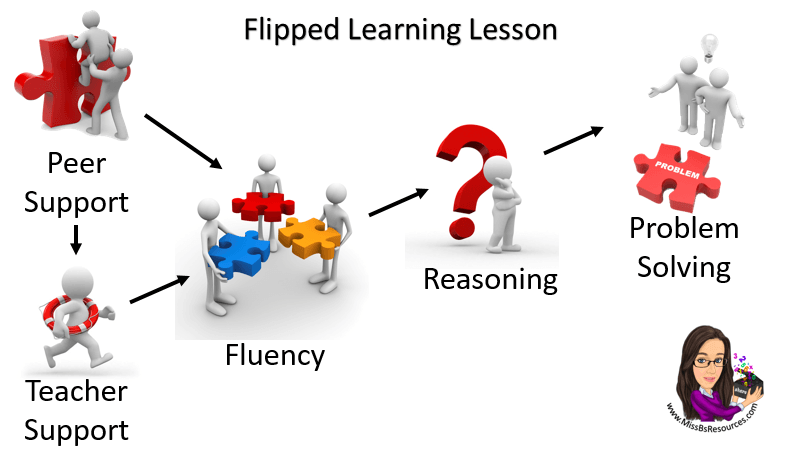
    Resultado de imagen de flipped classroom activities
    Image from https://www.missbsresources.com

    Some days ago I posted an infography on how flipped classroom can improve our teaching. I received some colleagues' comments on how it can be done. So, since a promise is a promise, here we go with some examples of how to do that in our English classrooms.

    This sample post is about flipping a grammar lesson, but you can use it and adapt it whatever lesson you are teaching.

    Let's say you are about to teach and explain your students the passive voice. 

    First thing to do is to get them exposed to some examples of the grammar structure through some reading activity or any other you find appropriate to this aim.

    As homework, they will be asked to watch some tutorials, videos or any digital resource you can think of. These digital contents have to be available on the net, or you can posted them on your blog, website or any digital device you use for your classroom. Sharing it by e-mail, Edmodo, etc., with your students can be also a good option.

    Here you have two different tutorial examples you can find on YOUTUBE on passive voice:


    LOWER LEVEL STUDENTS


    HIGHER LEVEL STUDENTS

    One of the fantastic and useful things of flipping the classroom is that you can load or post videos / tutorials which can match the different levels you have in classroom. Therefore, you can attend to diversity within the group, and students can set whatever pace they are comfortable with. For example, lower level students can view materials multiple times and higher level students can breeze through everything more quickly.

    Next lesson will be used to check if they have understood how the passive voice (or any topic you are teaching) works. Once in the classroom you can form groups of 3/4 (click here to know about grouping in the classroom) whose members will help each other understand the grammatical structure. 

    Resultado de imagen de groups in classroom
    Pic taken from http://libjournal.uncg.edu


    Each group will designate a chairperson and they will discuss for some minutes about the tutorial they watched at home, what they understood and misunderstood. All chairpersons will explain to the classroom their conclusions and the teacher will only listen to them without interrupting. 


    Then, the teacher, or any student who wants to participate, will clear up all the doubts, using always examples as visual as possible in order to make the classroom more motivating. This activity allows teachers to see exactly where students struggle and adjust the explanation accordingly.

    One of the resources that can be used to clarify questions about the grammatical structure is this kind of video


    where students, still in groups, try to identify and understand the structure used in different popular TV shows.

    Now it's time to start working with practice in the classroom. There will be different activities to work in groups, so students with different levels will help each other. In a traditional classroom, students of various level all have to follow the same pace set by the teacher and this is less than ideal for many of them.

    The teacher goes round the classroom and try to help students do the activities, so they can finally understand how the passive voice works through practice.

    There are different types of activities which are appropriate for this group work in the classroom

    Exercises on line which the teacher can show on the digital board or students can do with their own electronic devices:


    Games on line:


    Speaking games and Worksheets:


    Songs:


    You can also used traditional worksheets or workbooks which can be graded according to the levels in your classroom:


    For ESL/EFL classes, the flipped classroom approach is essential because it mazimizes the amount of time students speak English in class and minimizes the amount of teacher talk time.

    So let's get it started ...