Showing posts with label BACHILLERATO. Show all posts

Monday, 20 April 2020

WORLD BOOK DAY - A COLLABORATIVE READING IN CONFINEMENT -

WORLD BOOK DAY - A COLLABORATIVE READING IN CONFINEMENT


Even while living in confinement, we have to find the way to work with our students the different skills they'll need in the future. This is one of the reasons I've prepared some material to work reading for pleasure in a collaborative way. These are the steps of our task for this week in our Google Classroom:

  • I've chosen two different adapted novels according to my group levels. 
  • I've divided the pages into the students in each group. So they know which pages have to read aloud.
  • Some tools and apps for revising their pronunciation and entonation have been provided.
  • The task consists in recording a video of themselves while reading aloud the excerpts that have been assigned to them.
  • After that, they'll send me the videos and we'll have a collaborative reading of the same book.
When I've posted the task on Classroom this morning, I've also included an evaluation guide, so they know how I'm going to grade their readings. I've only considered three criteria to grade this task, with three levels each one:


The task deadline is on Friday, so they have five days to prepare properly, the part of the book they have to read and record.

Finally, I've given to them some recomendations on films about these novels, and I've invited them to participate in a Kahoot Challenge, about Literature in English:


I hope they definitely start loving literature!!!!!

World Book Day | High Green Primary School
Pic taken from http://highgreenprimary.co.uk/2020/02/world-book-day/


Thursday, 24 October 2019

HALLOWEEN STORIES

Resultado de imagen de halloween stories
Taken from http://www.yalsa.ala.org/thehub/wp-content/uploads/2015/09/scary-stories-for-halloween.jpg
HALLOWEEN: LET´S CREATE SOME COLLECTIVE STORIES

Are you bored of working with the same activities in the classroom every Halloween?. One of the ideas that works for me is to create collective stories. I give students some prompts so they can choose one of them and start making up different stories. What they like the most is working in groups, so the story is written between all of them.

Some of the prompts you can use are:

  1. You have had a strange feeling for a few days now. Today you’ve been feeling very energetic and tired at the same time. Your arm has been itching. It’s killing you now. You look at your forearm and see it for the first time. Something is moving under your skin.
  2. You open your eyes to complete darkness. The last thing you remember is the dog running out into the road, the brightness of the day light, and your car headed off the road. Then you realize that you are hanging upside down. 
  3. Your driving on a country road. It is late at night. You are far from home. You realize, as you check your mirrors, there is a man you do not know, hiding on the floor of your back seat.
  4. It’s 3 am. Your room is dark, but you can see that there is someone, standing at the foot of your bed. He or she is wearing a clown costume, and it has a knife.
  5. At 3 am you wake up out of a very sound sleep. You hear the ice cream truck outside of your house. And you realize, the sound that woke you up, was the sound of your 4 year old daughter.
  6. You are running late. After quickly getting ready, you rush out of the house and to your car door. A sound gets your attention, there is a fully grown male lion, just a few feet from you. Your car door is still locked.
  7. The worst cramps you have ever had set in on your biceps. It came on so suddenly. You drop to your knees, looking through your bedroom window, you see the full moon. You hear a little voice behind you, “Mommy?” 
  8. You are frozen with fear. You open your eyes, the tent is dark. But you can feel the heavy weight of a large tarantula covering one eye. Through the other eye you can see the shadows, from the moonlight, of other spiders covering the tent.
  9. The man leans into you. There is a dark red almost black color to the whites of his eyes. He is so close his nose is almost touching your nose. You can feel his breath when he says, “We all have it in here. We are all infected."


Resultado de imagen de HALLOWEEN
Pic taken from https://static.anuevayork.com/wp-content/uploads/2015/09/19195739/Co%CC%81mo-celebrar-el-Halloween-en-Nueva-York.jpg

Monday, 7 January 2019

LET'S REVIEW RELATIVE CLAUSES!!!!

IMPORTANT THINGS TO REMEMBER:

RELATIVE PARTICLES:
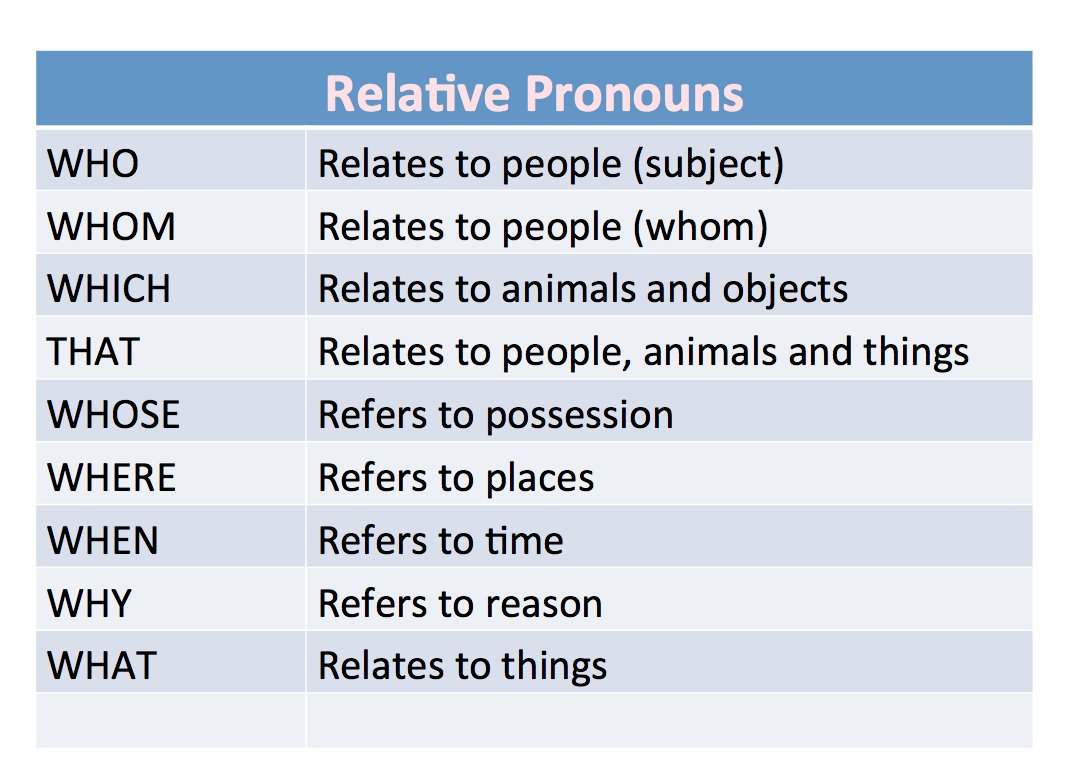
  • We use relative pronouns and adverbs to introduce relative clauses.
  • They have the same form than interrogative pronouns.
  • They are also conjunctions since they are used to join sentences.
  • They refer back to nouns and pronouns which are mentioned before. 
  • These nouns and pronouns are called the antecedent.
  • Relative particles are positioned close to their antecedents.
Resultado de imagen de relative pronouns
Image taken form https://twitter.com/MissValeria2008

  • "That" is not used in non-defining relative  clauses.
  • "Who, that, and which" can be omitted in defining relative  clauses if they are not the subject of the relative clause.

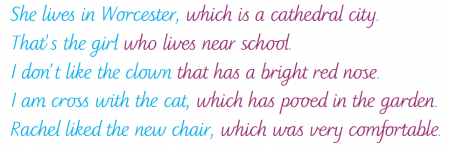
    RELATIVE CLAUSES:

    Resultado de imagen de relative clauses examples
    Image taken from https://www.theschoolrun.com/what-is-a-relative-clause

    • We use commas to separate a non-defining relative clause from the main clause. 
    Let's check what you can do ...


    Saturday, 13 October 2018

    LET'S CREATE A STORY TOGETHER!!!!

    Resultado de imagen de CREATE A STORY
    Image from https://bactheatre.org/classes/oaklandwinterPP


    Reading is a perfect activity to learn vocabulary, but why not to play to be writers o strorytellers?

    Recently, I've been brooding on how to make you, my students, create your own stories, and finally, I've come across a website which I've loved from the first time I saw it. 

    So, definitely, it was love at first sight!!!! 

    Resultado de imagen de emoji enamorado
    Image from http://www.stickpng.com/es/img/iconos-logotipos-emojis/emoticonos/emoticon-enamorada


    This activitiy can be done to practise both, written or spoken language.

    Please, click HERE to visit this marvellous website, and we can then start to enjoy the amazing world of creating new stories!!!!!

    "WRITING IS EASY. ALL YOU HAVE TO DO IS CROSS OUT THE WRONG WORDS."
    - MARK TWAIN.


    Thursday, 18 January 2018

    SOME USEFUL INFO ABOUT MODAL VERBS


    Resultado de imagen de CONFUSED
    Pic from https://allthingslearning.files.wordpress.com/2011/12/confused.jpg
    Are you confused when working with modal verbs?
    Do you find problems to choose the right one?

    Let's see some useful tips to understand how they work:

    PERMISSION:
    Resultado de imagen de permission
    https://cdn.xl.thumbs.canstockphoto.com/permission-rubber-stamp-eps-vector_csp45048244.jpg
    • We use can to ask for or give permission. 
    Can I sit here? / You can use my car if you like.
    • We use may or could to ask for or give permission in a more formal context or situation. 
    May I come in? / Could you pass me that notebook, please?
    ________________________________________________
    PROHIBITION:
    Resultado de imagen de prohibition signs
    Pic from https://www.loudandcleargraphics.co.uk/product/no-hoods-sign/
    • We use can't when something is against rurles or norms.
    You can't park here, sir.
    • We use mustn't  when the obligation comes from the person who is speaking.
    You mustn't speak when the teacher is speaking.
    ________________________________________________
    OBLIGATION:
    Resultado de imagen de obligation signs
    Pic from https://github.com/mbodmer/pictograms
    Need to, must, and have to can be considered synonyms and mean that something is required or necessary. Although there are some slight differences among them:

    • Need to is the one that is more limited in meaning:
    1. It is used when an action should be done.

    I need to clean my dirty bedroom.

    2. When it is very important for someone to do something.

    She didn't want to go to the city, but she needed to buy some food.
    • Must and have to have broader meanings, and once again the difference between them is very small.
    1. We use have to when the obligation comes from somebody else. The speaker can't change that because it's a law or a rule.

    We have to wear an uniform at our school.

    She can't come to the party, because she has to travel tomorrow early in the morning.

    2. We use must to show that the obligation comes from the speaker. It isn't a rule or a law.

    I must call my grandfather tonight.

    You must come and visit us the next time you come to Seville.

    HOWEVER, BOTH (MUST & HAVE TO) CAN BE USED ALMOST INTERCHANGEABLY IN THE FOLLOWING CASES:

    1. When something is required or neccesary. We must / have to go to the post office.
    2. When something is required by law. You must / have to pay your taxes.
    3. When something is very probable. It must / has to be 45 degrees here.

    IN ALL THESE CASES, MUST IS MORE FORMAL THAN HAVE TO.
    ____________________________________
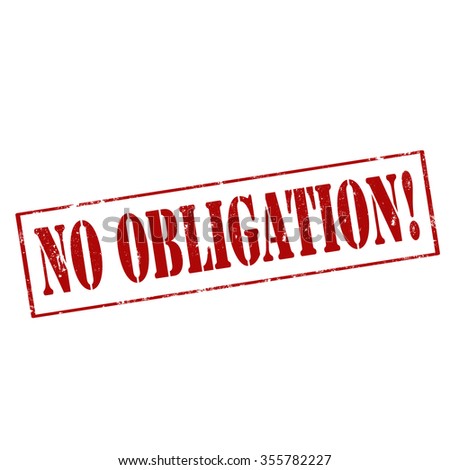
    NO OBLIGATION:
    Resultado de imagen de no obligation icon
    Pic from https://thumb1.shutterstock.com/
    • We use don't have to when there is no obligation to do something. It means that you can do something if you want, but it is not obligatory.
    We don't have to wear an uniform at our school. We can wear it if we want to but it's ok if we don't.

    Here there are some websites where you can practice these confusing modals:


    Let's finish with some examples of modal verbs in songs. ENJOY IT!!!!


    Monday, 8 January 2018

    GETTING AROUND!!!

    Resultado de imagen de getting around london
    Pic from https://www.youtube.com/watch?v=TaArq1R1n1c

    My dear A levels students, you can find some extra vocabulary about travelling, holidays and tourism below, so you can prepare your tests in advanced:


    All these sites are for Upper-intermediate level students, that is, those students whose level of English is between B1 and B2.


    Song: Wandering by Radical Face.


    Thursday, 30 November 2017

    IDEAS ABOUT CHRISTMAS TIME AT SCHOOL

    Resultado de imagen de CHRISTMAS TIME
    Pic from http://www.lovethispic.com/image/41124/christmas-time-in-london

    It's time to start preparing activities for Christmas at school. 

    You can find below some ideas I'm going to work with:

    • Project CHRISTMAS AROUND THE WORLD:
    Resultado de imagen de posters christmas
    Pic from http://jayce-o.blogspot.com/2012/12/25-inspirational-christmas-poster-design.html
    Group students in groups of 3/4 and make them choose one country. Their task is to search information and pictures in the Internet about how Christmas time is celebrated in the different countries they've chosen. 

    They have to print the pictures in colour and write captions in English for each picture. These captions have to describe what is in the pictures.

    Glue all the pictures and captions in a big poster that you can make with red paper. 

    The different groups have to present the information they have compiled to the rest of the classroom.
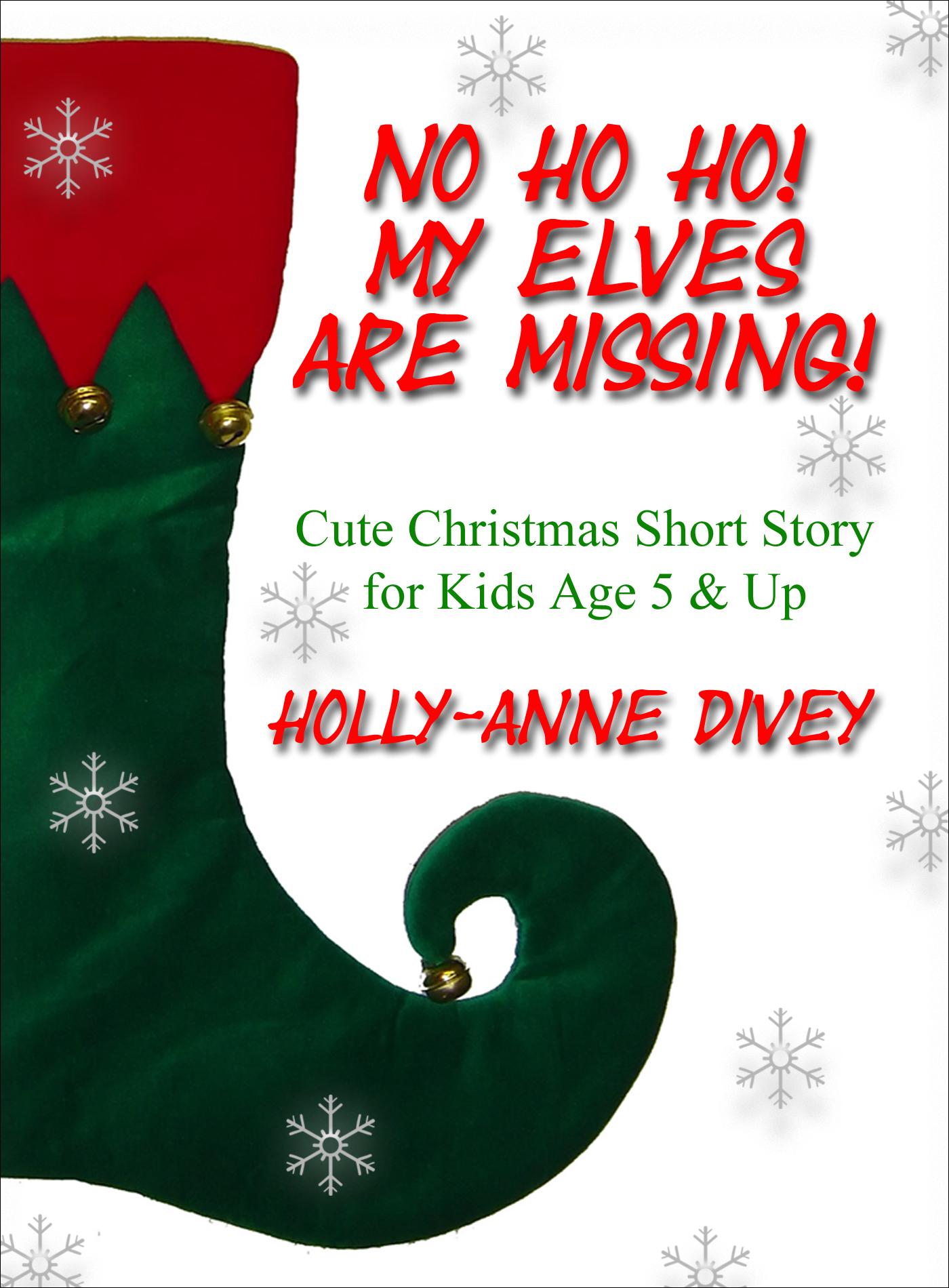
    • A contest of SHORT STORIES ABOUT CHRISTMAS:
    Resultado de imagen de short stories about christmas
    Pic from https://www.smashwords.com/books/view/251574
    It's an idea for higher level groups whose students are able to write in a proper English. You can provide some prompts so they can create their stories from them.

    You can evaluate these stories by giving positive points or with quantity marks.
    • Let's play to be VOICEOVER ACTORS:
    Resultado de imagen de dubbing studio
    Pic from http://saadstudio.in/recording.html
    Choose some classic Christmas film extracts and get your students to create the subtitles for them or to record the dubbed dialogues.

    It's a very funny and entertaining activity which help your students to improve their oral production in English.

    LET'S FINISH WITH A SONG: